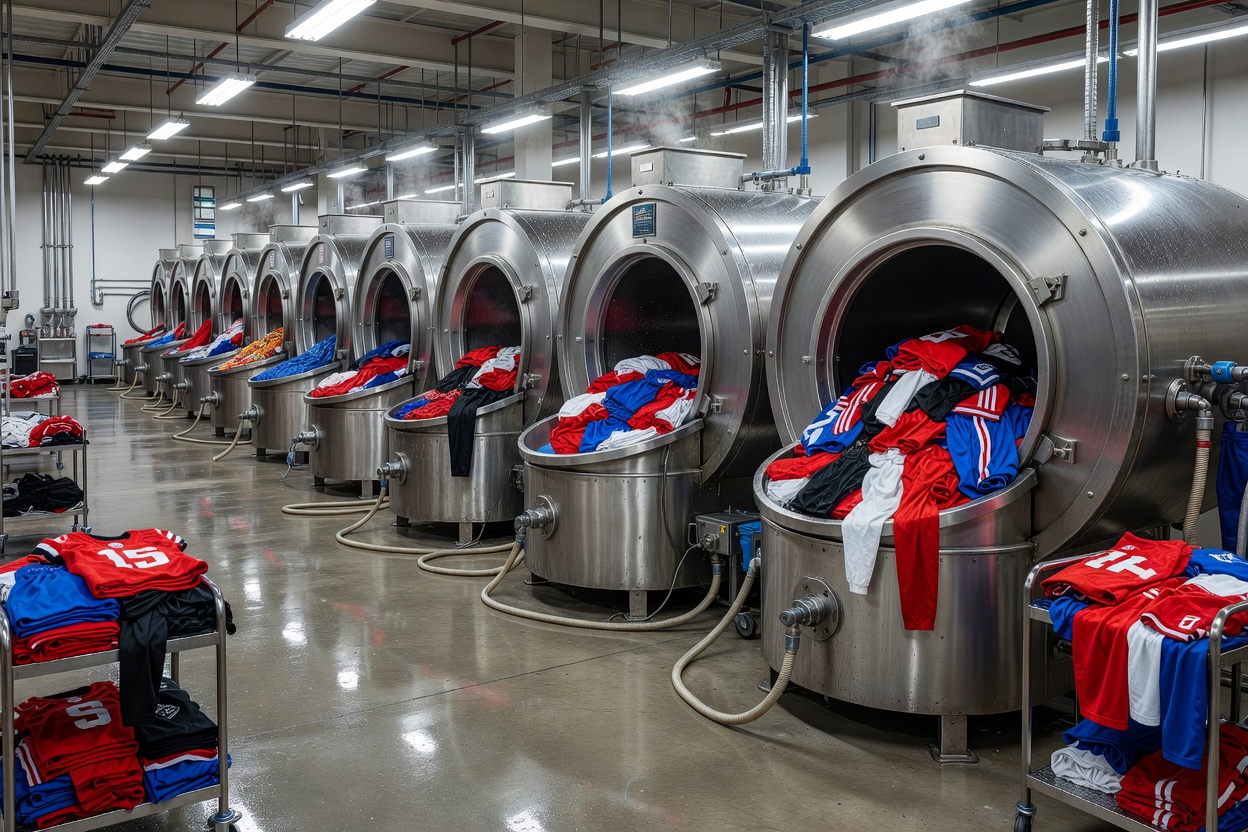
2. Temperature Safeguards and Mechanical Drying Constraints
The primary culprit behind kit destruction in athletic clubs is overheating during wash or drying phases. High thermal levels melt the adhesive bonding vinyl letters, causing peeling, edge curled numbers, and bleeding colors.
| Garment Type | Max Wash Temp | Centrifugal Spin Limit | Approved Drying Method | Chemical Limitations |
|---|---|---|---|---|
| Match Jerseys (Badged) | 30°C (86°F) | 800 RPM | Air drying or Cool Tumble (<40°C) | No fabric softener; No chlorine bleach |
| Polyester Shorts & Pants | 40°C (104°F) | 1000 RPM | Low Heat Drum Dry | Standard enzymatic sports detergent |
| Technical Compression Gear | 30°C (86°F) | 600 RPM | Hang Dry Only (Elasticity safeguard) | Mild liquid only; No optical brighteners |
| Waterproof Bench Jackets | 30°C (86°F) | 400 RPM (Delicate) | Drip Dry in Shade | Specialist DWR tech wash only |
3. Scheduled Turnaround vs Reactive Wash Cycles
Establishing predictable washing runs protects equipment lifespan and prevents matchday scrambles.
Scheduled Batch Cycles
Methodology: Standard wash shifts run at set hours (e.g., 18:00 post-match, 06:00 pre-morning training). Kit bags are queued systematically based on priority match fixtures.
Benefits: Equipment teams conserve energy, water, and detergent. Machines run at calculated full load capacities. Drying time is never rushed using excessive heat. Garments undergo post-wash inspection before sorting.
Reactive Wash Cycles
Methodology: Kits washed sporadically as individual coaches or players drop off dirty gear throughout the day.
Drawbacks: Frequent small, inefficient half-loads. Wash operators rush the drying process using high temperatures to meet immediate practice deadlines, rapidly ruining team numbering and degrading elastic cuffs.
4. Safety and Care Compliance Notice
Operate all laundry machinery strictly according to equipment manufacturer technical safety manuals and garment care labels. Athletic facility laundry rooms must be staffed by trained equipment custodians familiar with commercial extraction drums, adequate exhaust ventilation, and electrical isolation switches.
Never introduce harsh industrial chemical solvents, unverified bleaching powders, or undocumented stain-removal acids to technical sportswear. Adhere to regional occupational safety standards regarding laundry chemical handling and protective eyewear.
Match Turnaround Laundry Protocol
- Empty all pockets (whistles, GPS monitoring tags, tape, shin guard sleeves).
- Invert all match jerseys inside out to protect sponsor prints from abrasive drum contact.
- Fasten all Velcro tabs on bibs and goalkeeper gloves to prevent fabric snagging.
- Verify liquid detergent dose using automated pump dispensers calibrated for local water hardness.
- Inspect damp kits during transfer to drying racks; separate any lifted transfer badges for re-bonding.
Good For
Club operations managing 2-3 fixtures weekly who cannot afford replacement jersey delays or damaged sponsor displays on televised games.
What to Monitor
GPS tracking device pouches inside jerseys. Always extract sensitive electronic telemetry units before items enter wash drums.
Need Commercial Turnaround Workflows?
Consult with our uniform operational planners to formulate temperature-safe wash matrices and laundry shift rosters.
Inquire About Turnaround Setup