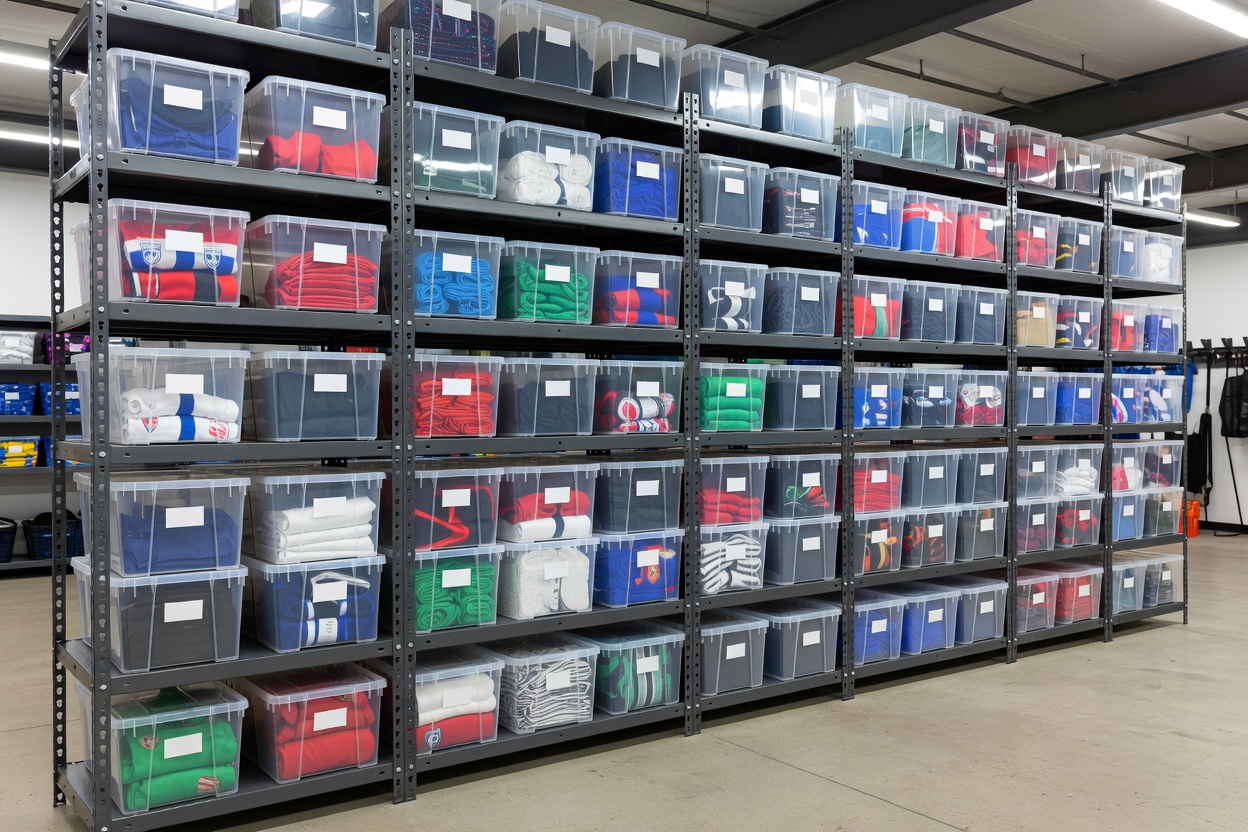
2. Environmental Storage Conditions for Technical Apparel
Technical synthetic fabrics like elastane, recycled polyester, and bonded polyurethane transfers deteriorate rapidly when stored in damp, unventilated basements. Adhere to these environmental boundaries:
Prevents mildew growth on sweat-treated garments and stops moisture from degrading vinyl heat seals.
Maintains adhesive elasticity in sponsor logos and prevents fiber embrittlement during off-season holding.
Fluorescent and sunlight UV causes rapid dye fade in pitch-fluorescent and club-color fabrics.
Continuous ventilation eliminates persistent locker-room odors and humidity pockets.
3. Centralized Warehouse vs Department-Level Storage
Assessing how equipment is centralized directly impacts daily operational labor hours and loss ratios.
Centralized Storage Depot
Operational Profile: A single master equipment bay managed by dedicated equipment managers. All training kits, tracksuits, match strips, and staff gear are issued from this hub.
Trade-offs: Drastically cuts shrinkage to under 0.5%. Guarantees immediate visibility of missing numbers. However, it requires players and staff to adhere to strict checkout times and creates bottlenecks before morning practices.
Department-Level Storage Cages
Operational Profile: Separate locked lockers or wire cages located adjacent to specific team changing areas (Academy, Women’s First Team, Men’s First Team).
Trade-offs: Fast daily kit retrieval for coaches. But stock reconciliation becomes chaotic; surplus stock in one cage is hidden while another department faces emergency shortages.
4. Inventory Logging and Loss Mitigation
Every garment should carry a physical thermal transfer label or heat-sealed Datamatrix barcode on the inner care tag. During weekly reconciliation, kit managers scan bins to flag shortages before match travel departure.
Garments not accounted for within 24 hours of match return trigger an immediate alert to team operations, preventing unreturned items from sliding into end-of-season write-offs.
Weekly Storage Room Audit Protocol
- Inspect Zone A match hangers: verify numbers 1–25 are present and free of surface dust.
- Perform physical count on Zone C reserve blanks; match against internal ledger counts.
- Check dehumidifier drainage lines and confirm digital humidity readings are below 55%.
- Separate any damaged kits found in return bins for condition assessment or mending.
- Log all issued coach apparel against signed equipment handover forms.
Good For
Professional facilities aiming to eliminate lost-jersey replacement expenses and maintain immediate access to backup gear during fixture congestion.
What to Monitor
Access control permissions. Never leave master uniform rooms unlocked during public facility hours or open academy training sessions.
Ready to Optimize Your Storage Cages?
Our logistical advisors assist sporting directors in structuring barcode bins, humidity protocols, and automated inventory logs.
Consult on Inventory Setup